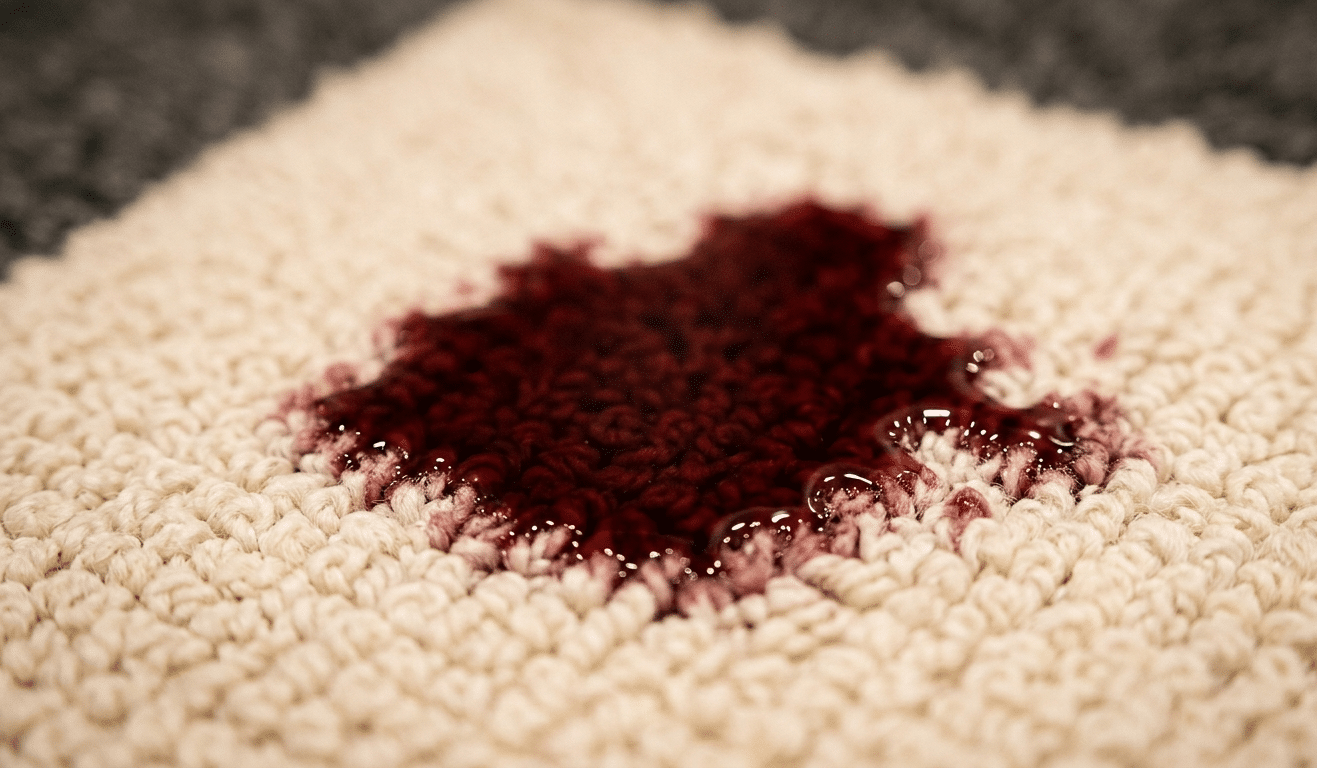
It often starts as something you only notice under certain light. A slight ridge or line where two pieces of carpet meet. Then it becomes more obvious. Then the edges start to part, and you’ve got a visible gap or a raised ridge that catches underfoot. At that point it’s both an eyesore and a trip hazard.
Carpet seam failures are more common than most people realise, but they’re also fixable in most cases without replacing the carpet.
Why carpet seams fail
Seams join sections of carpet and need to hold up under years of foot traffic, cleaning, and the humidity fluctuations Auckland brings. There are a few common reasons they fail:
- Adhesive age: heat-activated seam tape degrades over time. Seams from 10 to 15 years ago are reaching the end of their natural bonding life, particularly in areas with significant temperature variation.
- Moisture: flood events or persistent humidity can weaken the adhesive bond, causing seams to lift or part. This is often noticed a few weeks after a flooding event, once the floor dries out.
- High traffic: seams in doorways and hallways take concentrated stress with every footstep. These will fail earlier than seams in lower-traffic areas.
- Poor original installation: seams that weren’t properly joined at installation, whether through wrong tape, insufficient heat application, or misaligned edges, tend to fail earlier and more completely.
- Carpet tension: if the carpet isn’t held under even tension across the room, stress accumulates at seams and causes them to peak or split. This is why it’s worth assessing whether restretching is needed before attempting a seam repair.
Types of seam damage
Splitting seams
A visible gap between two sections of carpet. Common in high-traffic areas and anywhere the adhesive has aged out. You may feel the gap before you see it clearly.
Peaking seams
A raised ridge along the seam line. Usually caused by the carpet on either side pulling against each other, either from uneven tension or because the tape wasn’t bonded correctly at installation. Walking over it produces a distinct feel and it becomes very visible at low angles of light.
Fraying seams
The edges of the carpet sections are unravelling. This happens when the seam wasn’t sealed with an effective edge sealer, or when moisture or heavy vacuuming has weakened the fibre bond over time. Fraying gets progressively worse and needs to be addressed before the damage spreads further from the seam.
Can you fix a seam yourself?
For very early-stage fraying, a carpet seam sealer applied carefully along the edge can slow further deterioration. This is a holding measure rather than a repair, but it’s worth doing if you’re waiting to book a professional visit.
Full seam repair is a professional job. It requires removing old tape completely (residue causes new tape to fail just as fast), trimming both edges to clean lines, and applying new heat-activated tape with a seam iron at the correct temperature and pressure. A seam roller is then used to achieve consistent bonding across the full length of the join. Attempting this without the right tools typically produces a worse result than what was there before.
Peaking seams also usually require restretching before the seam can be properly repaired. If the underlying tension issue isn’t resolved, the seam will peak again.
When to call Carpet Surgeon
- The seam has parted visibly, creating a gap or ridge of more than a few millimetres
- The seam is in a doorway or hallway where it’s a tripping risk
- The seam is peaking, which points to a tension issue that needs to be addressed as part of the repair
- Multiple seams in the same room are failing, which can indicate a broader installation issue or a humidity problem
- The carpet edges around the seam are actively fraying or unravelling
We offer carpet seam repair as part of our broader carpet repairs service across Auckland. Our technicians will assess the cause of the failure before starting work. If the carpet needs restretching first, we’ll identify that and factor it into the job.
What we see in Auckland homes
Seam failures are particularly common in Auckland homes built between the 1970s and 1990s, where carpet was often installed room by room and joined with tape products that have long since reached the end of their life. We also see seam failures in newer builds where fast construction timelines led to installation shortcuts.
Post-flood seam failures are another pattern we deal with regularly following Auckland’s heavier weather events. Moisture that gets under carpet can dissolve seam tape adhesive within days. If you’ve had any water ingress, even minor, it’s worth checking your seams a few weeks later for early signs of lifting before the problem becomes more obvious.
Sort it out before it becomes a safety issue
A lifting or parting seam gets worse with every footstep. The sooner it’s repaired, the less damage needs to be addressed and the cleaner the result. Most seam repairs can be completed in a single visit.
As a trusted professional carpet cleaning Auckland with over 30 years of experience across Auckland, Carpet Surgeon handles all types of carpet repair. Contact us for a free quote. Photos of the damage are helpful and let us give you an accurate estimate before we visit.