The Problem Most Pet Owners Know Too Well
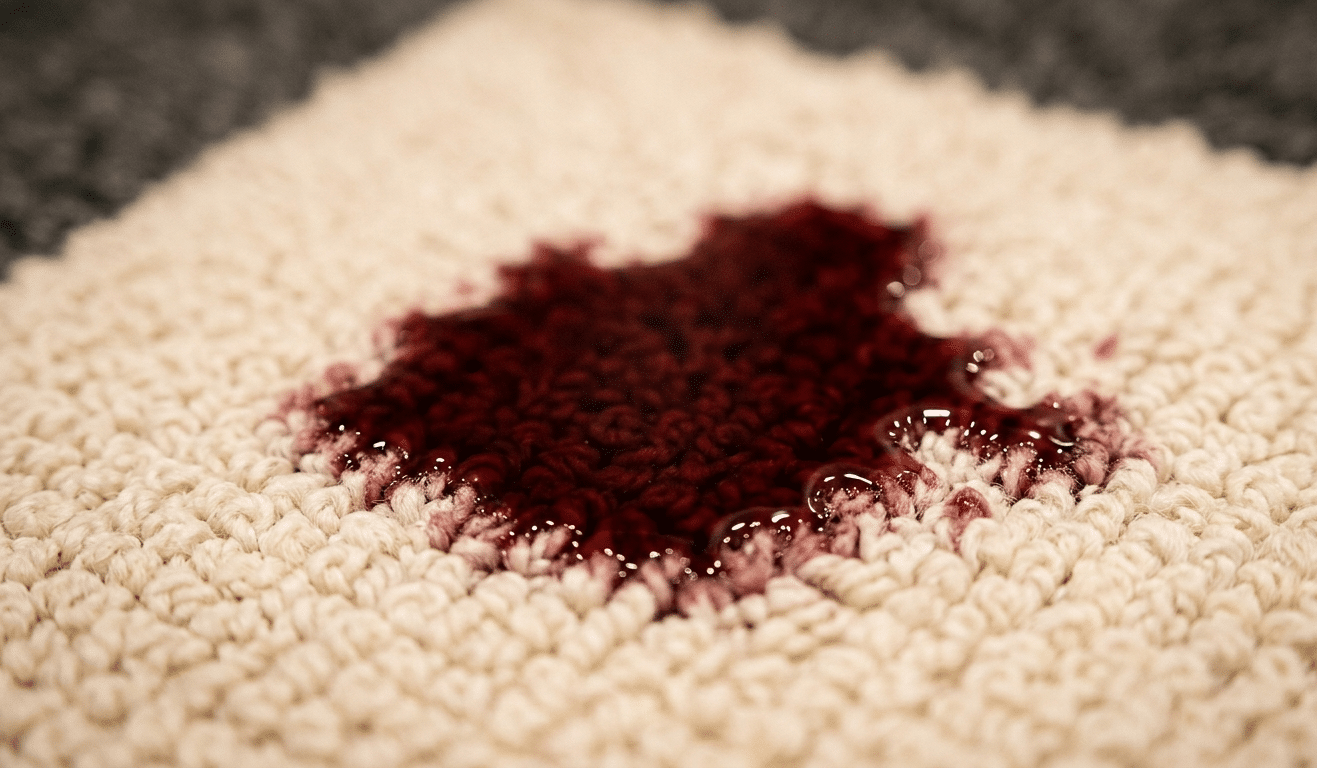
You step onto a damp patch in bare feet. Or spend ten minutes sniffing corners trying to locate a smell you can’t quite pin down. Pet accidents on carpet are one of the most common household problems in New Zealand, and one of the most frequently mishandled. The trouble isn’t just the stain. It’s what happens underneath it.
Pet urine soaks through carpet fibres quickly, passes into the underlay, and in persistent cases reaches the subfloor itself. By the time you can smell it reliably, the contamination is well below the surface and surface cleaning alone won’t fix it.
Why Pet Urine Is So Hard to Fully Remove
Fresh urine is mildly acidic and relatively straightforward to blot up. The problem develops as it dries. Urine becomes alkaline as it oxidises, releasing ammonia, which creates that persistent sharp odour. More critically, it leaves behind uric acid crystals in the carpet fibres. These crystals are largely insoluble in water, which explains why cleaning with water-based products repeatedly fails to eliminate the smell.
There’s also a behavioural loop at play. If any trace of urine odour remains after cleaning, most pets will return to the same spot. This compounds the contamination over time, making each successive treatment harder.
DIY vs. Professional Treatment
What DIY Can Achieve
For a very fresh accident on synthetic carpet, prompt action makes a real difference. Blotting (never rubbing) with a clean white cloth removes the bulk of the liquid. Enzyme-based pet cleaners, available at supermarkets and pet stores, are designed to break down uric acid crystals when applied correctly and left to dwell for the time specified on the label.
The limits are significant though. Consumer enzyme products are lower in concentration than professional-grade equivalents, and they’re applied at the surface. Anything that has penetrated the underlay is not reached. For older stains, repeat accidents in the same area, or any contamination that has reached the subfloor, DIY treatment is unlikely to fully resolve the problem.
What Professional Treatment Delivers
Professional carpet cleaning Auckland for pet urine combines high-concentration enzyme pre-treatment with hospital-grade hot water extraction. The enzyme solution is applied first and given adequate dwell time to break down uric acid crystals through the full depth of the pile. The extraction phase then flushes the treated area thoroughly, removing broken-down deposits and bacteria.
For severe or longstanding contamination, a dedicated carpet sanitisation treatment alongside the deep clean addresses bacterial load and residual odour at source. This is particularly relevant where underlay has absorbed urine across multiple incidents.
When to Call a Professional
- The smell returns within a few days of cleaning
- The stain has spread or darkened over time
- Multiple affected areas exist in the same room
- You have children, elderly residents, or anyone with respiratory sensitivities
- The property is being prepared for a new tenancy or sale
The Auckland Climate Factor
Auckland’s humidity means moisture lingers in carpet fibres longer than in drier climates, extending the window during which bacteria multiply. In winter especially, carpets dry slowly, and a poorly treated pet accident can develop a mould problem in the underlay if left without professional intervention.
For between-visit management, our guide on how to remove pet urine smells from carpet covers first-response steps and what to avoid.
Get It Sorted at the Source
Carpet Surgeon has been dealing with pet-related carpet damage across Auckland for over 30 years. Our technicians use professional enzyme treatments and extraction equipment that addresses the full depth of the problem, not just the surface. Contact us for a free, no-obligation quote.