The Stain That Spreads the Moment You Touch It
A leaking pen. A toppled ink cartridge. A child with a marker on the lounge floor. Ink stains have a particular quality that makes them one of the more challenging carpet emergencies: they spread readily. The instinctive response, rubbing at the mark to try to lift it, is almost always what makes it worse.
The other complication with ink is that there are several different types, and what works on one type actively fails on another. Getting the approach wrong early doesn’t just leave a stain: it can set the pigment into the fibre in a way that professional treatment can’t fully reverse.
Why Ink Is Different to Other Stains
Most carpet stains are either water-based (tannins, food dyes, mud) or oil-based (grease, cosmetics). Ink doesn’t fit neatly into either category, because there are several chemically distinct types:
Water-Based Ink
Found in most modern rollerball and fineliner pens, and in children’s washable markers. Water-based ink is the most manageable type. It’s more soluble and responds reasonably well to cold water treatment and mild cleaning agents when fresh.
Oil-Based or Permanent Ink
Found in ballpoint pens and many permanent markers. Oil-based ink contains dye carriers that bond firmly with carpet fibres on contact. Water-based cleaning approaches don’t work on oil-based ink. This is where many home attempts go wrong: applying water to a ballpoint ink stain does almost nothing except spread the stain and add unnecessary moisture to the carpet.
Solvent-Based Ink
Found in some printer inks, permanent markers, and specialty pens. These require solvent-based treatment to break the carrier apart. Applying the wrong solvent without knowing the ink type can spread the stain significantly or cause dye damage to the carpet fibres themselves.
The Rubbing Problem
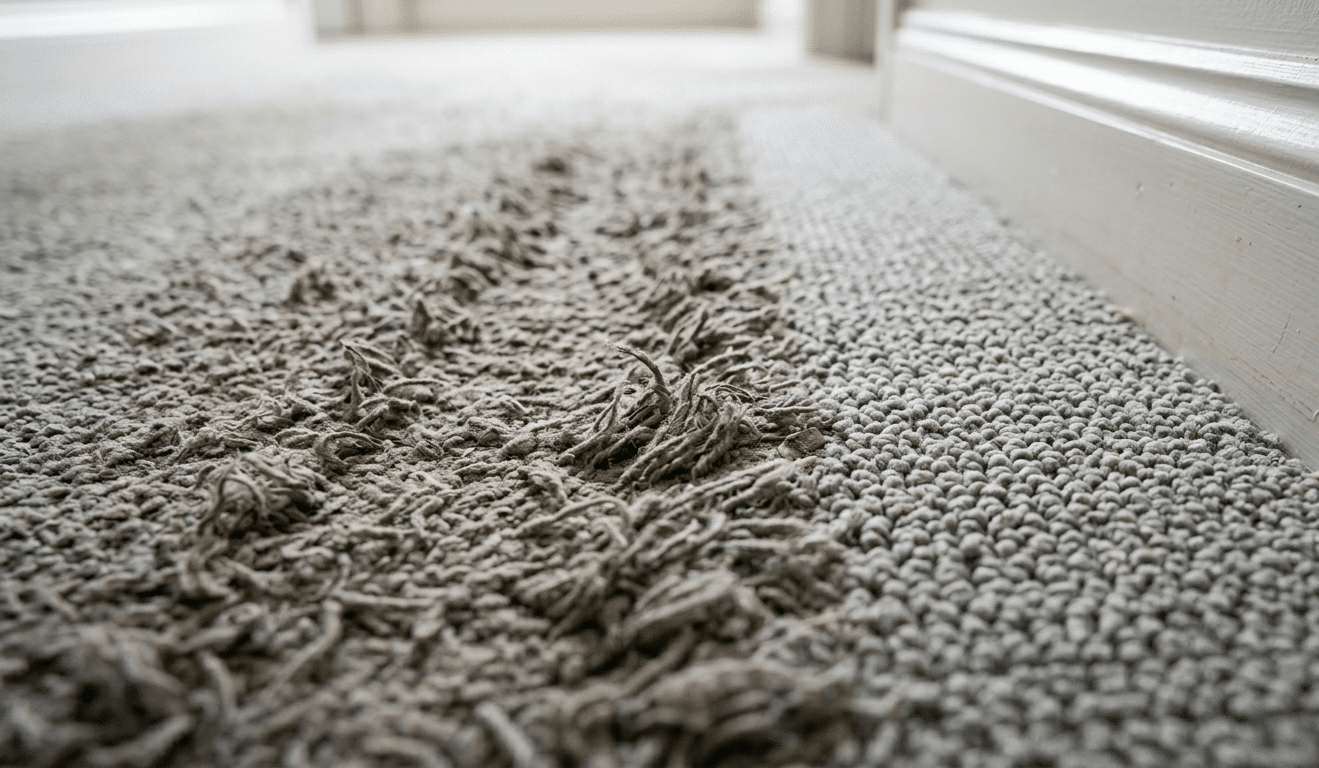
Rubbing an ink stain does two things: it spreads the pigment laterally across a larger area of carpet, and it pushes it deeper into the pile where it’s harder to extract. What starts as a small mark from a pen can become a large, diffuse stain covering several times the original area after a few vigorous attempts to rub it out.
This is the most common and most costly mistake with ink stains. By the time a professional is called, the original small stain has been transformed into a larger, more challenging problem through the treatment it’s already received.
DIY Response: What to Do and Not Do
Blot, Don’t Rub
For any ink stain, immediate blotting with a clean white cloth to lift as much fresh ink as possible is the right first step. Press and lift. Do not rub in any direction.
Identify the Ink Type If You Can
Check the pen or product if it’s nearby. Washable or water-based inks respond to cold water and a small amount of pH-neutral soap, applied to a cloth and blotted through. Oil-based and permanent inks need a solvent-based approach.
Solvent-Based Treatment at Home
Isopropyl alcohol (rubbing alcohol) is the most commonly recommended home treatment for ballpoint and oil-based ink. It’s applied sparingly to a cloth (not directly to the carpet) and blotted through the stain. The solvent dissolves the carrier that bonds the ink to the fibre. This approach can work on synthetic carpet for fresh marks. On wool, it carries a risk of colour damage and should be used with significant caution, if at all.
The limitation is that consumer-grade isopropyl alcohol is lower concentration than professional solvents, and the technique requires a light touch. Over-application spreads the ink further. Under-application does nothing.
What Professional Treatment Does Differently
Professional carpet stain removal for ink begins with identifying the ink type before any product is applied. The appropriate solvent or pre-treatment agent is then selected based on the ink chemistry and the carpet fibre. Application is controlled, dwell time is monitored, and extraction follows to remove the broken-down pigment and any treatment residue.
For large or spread stains, multiple treatment passes may be needed. Where the ink has already been spread through home rubbing attempts, the technician will assess the full extent of the affected area and work outward systematically.
When to Call a Professional
- Permanent marker or ballpoint pen on wool or natural fibre carpet
- Any ink stain that has already been rubbed and spread
- Printer ink or solvent-based ink on any carpet type
- Ink stains where you’re unsure of the ink type
- Any mark that hasn’t responded to an initial careful home attempt
The Auckland Context
Ink stains in Auckland homes are more common than you’d think, particularly in households with school-age children or home offices. The key point is that acting carefully and calling for professional help early gives the best outcome. Our broader guide to carpet stain removal in Auckland covers first-response approaches for a range of common stain types.
Stopped Early Enough, Most Ink Stains Are Treatable
If the stain hasn’t been spread by rubbing and professional treatment starts promptly, the majority of ink stains respond well. The worst outcomes come from delayed professional attention after repeated home rubbing. Contact Carpet Surgeon, the trusted name in carpet cleaning in Auckland for an honest assessment. Our carpet stain removal team will tell you what’s achievable before you commit to anything.