Lying on the floor, a rug and a carpet look like much the same thing. They are not. A carpet is fitted, stretched over underlay and held at the edges, so it is supported from below and cannot move. A rug is a free-standing textile. It may be hand-made, it may be sixty years old, it may be built from three different fibres with a glued backing holding the whole thing together. That is why rug cleaning in Auckland is a specialist job rather than a smaller version of carpet cleaning, and why the same machine that safely cleans your hallway can ruin a rug in minutes.
This guide explains what actually happens inside a rug when it gets wet, what professional rug cleaning involves before anyone touches it, and why the difference between a good result and a permanently damaged rug usually comes down to two things most people never think about: dye stability and drying.
A Rug Has No Floor Holding It Together
Start with the physical difference. Fitted carpet sits on underlay, over a floor, gripped by smooth edge around the perimeter. It is held flat and under tension, so it cannot shift or distort while it is being cleaned.
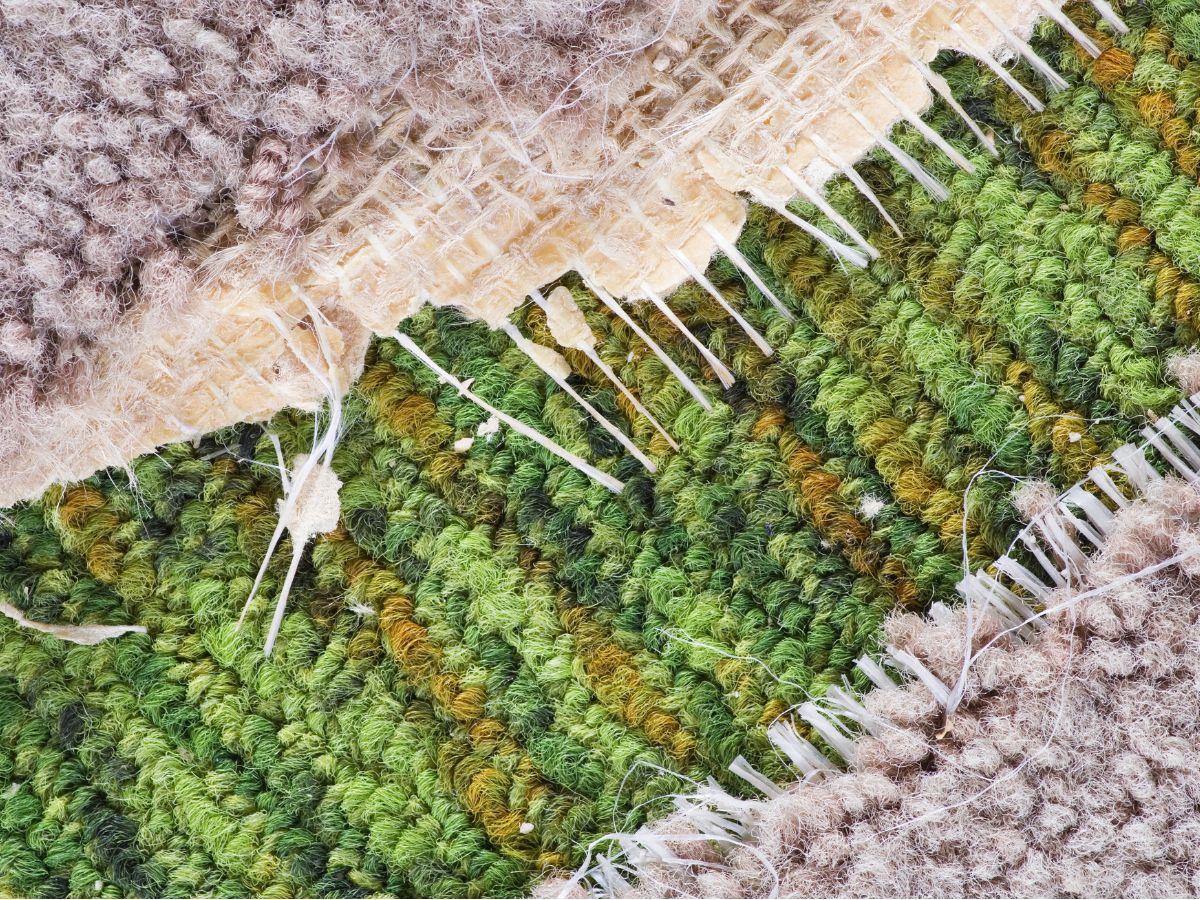
A rug has none of that. It is a self-supporting structure made of warp threads, weft threads, pile and often a secondary backing, and those parts do not all respond to moisture in the same way. Wet a rug unevenly and some constructions distort, which is how rugs come out of a DIY clean with wavy edges, curled corners or a permanent ripple down the middle. Use too much water and moisture stays behind in the foundation and the backing long after the surface feels dry, which is the root of most of the damage we are asked to put right.
This is also why in-home rug cleaning cannot match a facility. A rug needs to be lifted, handled from both sides, and dried in controlled conditions, none of which is possible while it is lying on your living room floor.
Construction: What Rug Cleaners Look At First
Before any water is used, the construction gets identified, because each type behaves differently.
Hand-knotted rugs, including most Persian, Turkish, Afghan and Indian pieces, are built knot by knot onto a cotton or wool foundation. They are genuinely durable and often respond beautifully to cleaning, but their dyes and foundations need testing first.
Hand-tufted rugs look similar from above and are completely different underneath. The pile is punched into a fabric backing and held with a layer of latex adhesive, then a secondary backing is glued over the top. That latex breaks down with age and with excess water, which is where the smell people describe as wet dog or old glue comes from, and why over-wetting a tufted rug can release the backing permanently.
Flatweaves and kilims have no pile at all, which makes them quick to work on and unforgiving, since there is no pile to disguise an uneven result. Machine-made rugs on polypropylene are the most forgiving of the lot. Natural fibre rugs in jute, sisal and seagrass are the least forgiving, because those fibres are cellulose and browning or shrinkage is a real risk with the wrong method.
Telling these apart is one of the specialised roles for rug cleaners who do it daily, and that single assessment determines everything that follows.
Fibre Decides the Method
Wool is the most common rug fibre and the most rewarding to clean, with one condition: it is a protein fibre and it does not tolerate high alkalinity or aggressive chemistry. Treated correctly it releases soil readily and looks remarkable afterwards. Treated with a strong supermarket product, it can go harsh, dull or yellow.
Silk is also a protein fibre and far more delicate again. It needs a method matched to its construction and to the maker’s care instructions, and it is easily damaged by rough handling.
Cotton absorbs a lot of water and is prone to browning, where natural sugars and tannins wick to the surface during slow drying and leave a tan-coloured halo. That is a drying fault, not a dirt problem, and it is preventable.
Then there is viscose, which is the one worth knowing about. Sold as art silk, bamboo silk, banana silk or faux silk, viscose is a processed cellulose fibre that loses a large part of its strength the moment it is wet. It yellows, it mats, and it can turn from a soft sheen to a crushed, straw-like texture after a single spill of water. Plenty of people only discover they own one when they try to blot a spill and the patch dries darker and stiff. Experienced rug cleaners treat viscose as a different job altogether. A rug like this needs a low moisture approach, and some manufacturers specify professional dry cleaning for viscose, which is why the care label and an inspection matter before anything is agreed.
Why We Test for Dye Bleed Before Cleaning
Our rug cleaners in Auckland test for colourfastness before cleaning, because colour transfer is difficult to put right and can be permanent. If a red dye in a traditional rug is unstable, water carries it into the adjacent cream or ivory area, and scrubbing harder makes it worse rather than better.
The principle is easy to picture: a damp white cloth pressed into a discreet area shows whether a dye is holding or moving. A proper test goes further, because what matters is how each dye reacts to the specific solution we intend to use, not just to plain water. From there the approach changes: cooler water, faster drying, additives that hold dyes in place, or a low moisture method for the whole piece. Correcting colour run after the event is slow, specialised work with no guarantee of a full recovery, which is the entire reason for testing first.
Dry Soil Comes Out Before Any Water Goes In
This is the step DIY rug cleaning usually shortcuts, and it matters more than almost anything else.
Regular vacuuming does remove a good deal of loose soil, and it is worth doing often. What it will not reach is the embedded grit that works its way down into the base of a rug over years. Add water to that and you do not remove it, you turn it into mud and push it further into the foundation. The rug then dries looking flat and grey and nobody can work out why.
That is why the dry soil is driven out first, by hanging the rug and working it mechanically, with the exact method depending on the rug in front of us. The wet stage then only has to deal with what is left: oils, residues and staining. Cleaning in the right order is most of the result.
Drying Is Where Rugs Are Won and Lost
Drying is the stage where rug cleaning either succeeds or fails, and a rug left to dry slowly on its own is a rug at risk. Slow drying is what causes browning in cotton, odour in a tufted backing, and in a damp Auckland winter it is what lets mould establish inside the foundation where you cannot see it.
Controlled drying means air moving across both faces with industrial blowers, at a pace that gets moisture out before any of that can start. It is unglamorous and it is the difference between a rug that smells clean and a rug that smells faintly musty for the next two years.
Fringes, Edges and Selvedges
The fringe on a hand-knotted rug is not decoration. It is the warp threads of the foundation, the structure the rug is built on, emerging at each end. When fringes shred, knot or go grey, the fix is specialised and heavy-handed cleaning accelerates the damage.
The side edges, or selvedges, are the other failure point, usually from vacuum beaters or furniture dragging. Both are worth looking at while the rug is off the floor, because they are far cheaper to stabilise early than to rebuild later.
What Happens at a Rug Cleaning Facility
At our purpose-built facility in Mt Eden, Auckland, every rug starts the same way and then follows a plan of its own. We inspect each rug’s fibre, construction, backing and dye stability before choosing a cleaning method, along with its condition, odour, indentations and staining. Dry soil is removed while the rug is hung. Stains are pre-treated. Where the rug is suitable, we then use hot water extraction, our preferred method, with hot water worked into the pile under pressure and drawn back out along with the soil and allergens it has released. More delicate pieces are given a gentler, lower moisture treatment instead. Stubborn staining is worked over repeatedly, sometimes across several days.
From there it is sanitised, dried with industrial blowers, optionally protected and deodorised, checked and wrapped. Most rugs are ready within a few days, with heavily soiled pieces taking longer. You can drop off between 9am and 4pm, our team will help you carry it in from the car, and pickup and delivery can be arranged on request.
Look at the Floor Underneath While the Rug Is Away
A rug coming off the floor is the one chance you get to see what is under it, and it is worth taking.
Two things usually turn up. The first is a sharp contrast between the protected carpet under the rug and the faded, flattened carpet around it, which tells you how much traffic and light that room is getting and whether the rest of the floor is due for professional carpet cleaning in Auckland. The second is damage that the rug has been quietly hiding: a split seam, a burn, a pet-damaged patch near a doorway, or ripples that were never dealt with.
None of that needs to mean new carpet. Patching, re-seaming and restretching are routine carpet repairs in Auckland, and they are a fraction of the cost of replacement. With the rug away and the floor clear, access is as good as it will ever be, so it is the sensible moment to get both jobs done at once.
Rug Cleaning FAQs
How often should a rug be professionally cleaned?
As a general guide, every 12 to 18 months, and annually if the rug sits in a hallway, a living room with pets, or anywhere with direct outside access. It does depend on how much use the rug gets, how soiled it is and what the maker’s care instructions say, which is why we would rather look at it than give you a number over the phone. Vacuum regularly in between, on both sides where the rug allows.
Is professional rug cleaning safe for antique and delicate rugs?
Age by itself is not the problem, but it does mean the rug needs assessing before anything is agreed. What matters is fibre, dye stability and the condition of the foundation, which is what our rug cleaners establish in the pre-clean inspection. That inspection also tells us whether wet cleaning is suitable at all, because some fragile or highly valuable textiles are better cleaned by another method, or referred to a specialist conservator.
Can pet urine actually be removed from a rug?
Urine passes straight through a rug into whatever is beneath it, so it needs treating from both sides, not just blotted from the top. Fresh accidents respond very well. Older, repeated contamination may leave permanent dye change in the fibre, which is a separate issue to the odour, and that is assessed honestly before any work starts.
Why not just hire a machine and do it at home?
Because a hire machine gives you water and suction, and no way to identify fibre, test dyes, remove dry soil first or dry the rug under control. Those four things are what professional rug cleaning actually consists of.
Is rug cleaning the same price as carpet cleaning?
No. Rug cleaning is quoted per rug based on size, fibre, construction and condition, which is why rugs are quoted after inspection rather than by the square metre over the phone. Quotes are free and there are no hidden costs.
Does the carpet need repairing before cleaning, or after?
Repairs first as a rule. Fixing a seam, patch or ripple before cleaning means the whole floor is finished evenly, and any carpet repair in Auckland is easier to match when the surrounding carpet has not just been wet.
Bring Us the Rug, We’ll Tell You the Truth About It
Not every rug needs the full rug cleaning process, and we will tell you when a light clean is all yours needs. What we will not do is put a rug through a process its fibre or its dyes cannot handle.
If you have a rug you are unsure about, bring it in or send us a photo. Our team of carpet cleaners in Auckland has been working on rugs here since the 1990s, our technicians are IICRC-certified, and every quote is free and no-obligation.
Call 0508 787 4366 or drop in to our Mt Eden facility between 9am and 4pm.