The Ripples That Raise the Question
You notice it first as a slight ridge underfoot. Then a visible wave across the middle of the room. Buckled, rippled carpet is one of the most common carpet problems in Auckland homes, and it raises an immediate question: is this worth repairing, or is it time to replace?
The honest answer in most cases is that re-stretching is the smarter move, and it costs a fraction of what replacement does. But it’s worth understanding why carpets ripple in the first place, what re-stretching actually involves, and what signs indicate that replacement is genuinely the better call.
Why Carpet Ripples and Buckles
Rippling happens when the carpet loses tension across the floor. The causes vary, but the most common in Auckland homes are:
- Incorrect installation where insufficient tension was applied during laying
- High humidity causing the carpet or its backing to expand and contract repeatedly over time
- Heavy furniture dragged across the carpet rather than lifted, pushing it out of position
- Delamination of the carpet backing separating from the pile layer
- Underlay breakdown in older installations, reducing the stable base the carpet sits on
Auckland’s subtropical climate is a significant factor. The humidity variation between a dry summer and a wet winter causes carpet to expand and contract seasonally. Over time, this movement accumulates, and carpets that were installed correctly can still develop ripples years later without any fault on the installer’s part.
What Carpet Re-Stretching Involves
Professional carpet re-stretching in Auckland uses a power stretcher to pull the carpet back to full tension across the room. Unlike a knee kicker (the manual tool commonly used for touch-ups), a power stretcher applies force across the full width of the room, creating even tension that holds long-term.
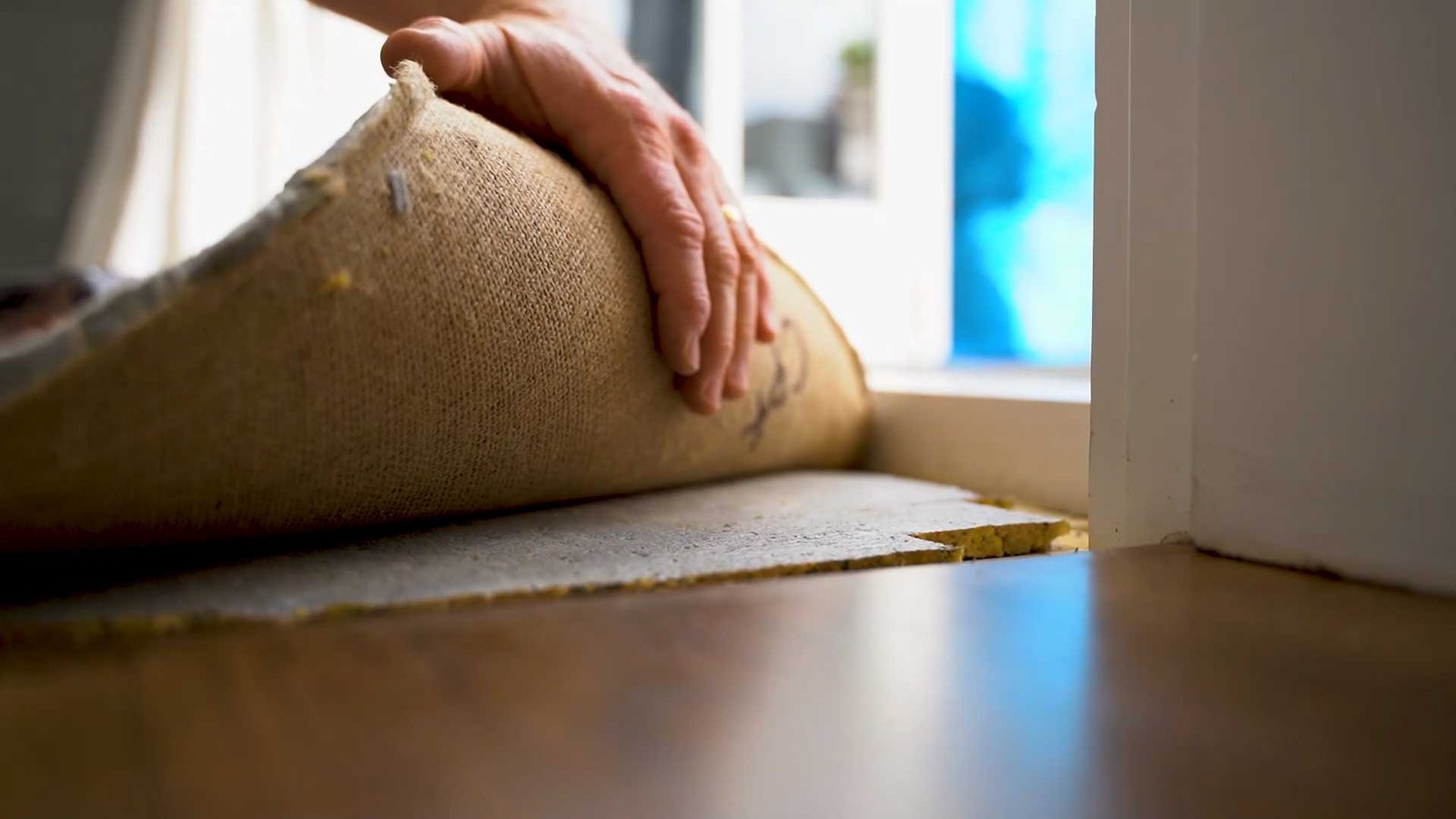
The process involves lifting the carpet from the tack strip at one or more edges, stretching it to the correct tension, and re-securing it. Any excess carpet is trimmed neatly. In most rooms, the job is completed in under an hour, and the carpet is immediately usable.
The result is a flat, smooth surface that looks and feels like a properly installed carpet, because it is one again. Done correctly by an experienced technician, re-stretching can extend the life of a carpet by many years.
DIY Re-Stretching: Why It Usually Falls Short
Knee kicker tools are available for hire, and some homeowners attempt DIY re-stretching on this basis. The limitation is force: a knee kicker applies localised pressure at one point, which is insufficient to create even tension across a full room. The result is typically a carpet that looks better briefly but ripples again within months as the unevenly applied tension redistributes.
A power stretcher, which is the professional tool for the job, isn’t available for consumer hire in New Zealand. This is a job where the right equipment makes the difference between a lasting repair and a temporary fix.
The Cost Comparison: Re-Stretching vs Replacement
This is where the decision usually becomes clear. Professional re-stretching for a standard room is typically a few hundred dollars at most. Full carpet replacement for the same room involves the cost of new carpet, underlay, installation, and disposal of the old material, which for a medium-sized room can run to several thousand dollars.
For a carpet that is otherwise in good condition, structurally sound, and showing no signs of fibre breakdown or delamination, re-stretching is almost always the more sensible investment. Our guide on how long carpet should last with regular maintenance explains what different carpet types can realistically achieve when properly maintained.
When Replacement Is the Right Call
Re-stretching solves a tension problem. It doesn’t fix underlying issues with the carpet’s condition. Replacement makes more sense when:
- The carpet backing has delaminated and the structural integrity of the carpet itself is compromised
- Fibre breakdown in traffic lanes is advanced and cleaning won’t restore the appearance
- The underlay has failed and needs replacement, making a full re-installation the logical next step
- The carpet is at or near the end of its expected lifespan and re-stretching would only delay the inevitable briefly
- Persistent odour or mould contamination in the underlay means the full installation needs to come out
If you’re genuinely uncertain, a professional assessment will tell you quickly which situation you’re in. Carpet Surgeon offers honest advice without pushing the more expensive option. If re-stretching will do the job, we’ll say so. If new carpet installation is the better call, we’ll tell you that too.
When to Call a Professional for Re-Stretching
- Visible ripples or waves across the floor when viewed from a low angle
- Carpet edges lifting away from the skirting board or tack strip
- A tripping hazard from raised carpet in a doorway or high-traffic area
- Ripples returning after a previous DIY attempt with a knee kicker
- New ripples appearing after a flood, deep cleaning, or a particularly humid Auckland winter
Serving Auckland Homeowners and Landlords
Carpet Surgeon has been carrying out carpet repairs and re-stretching across Auckland since the 1990s. We use power stretchers on every re-stretch job, and we’ll give you a straight assessment of whether the carpet is worth saving before we start. Contact our expert team of Auckland carpet cleaning and carpet repair professionals for a free, no-obligation quote.